

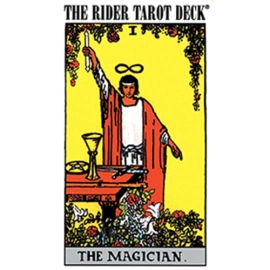
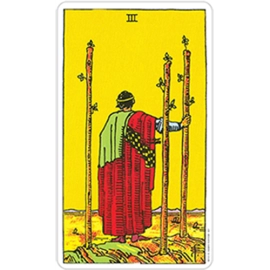

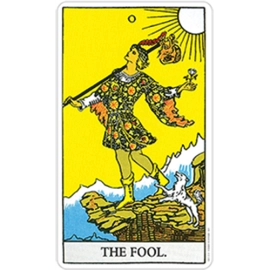
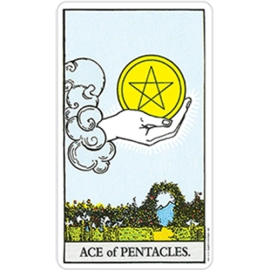
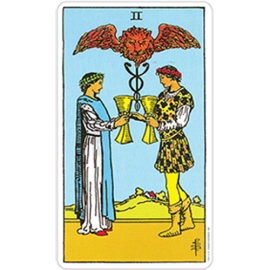
Mazzo di Tarocchi Rider-Waite Tarot Deck
Fuori produzione
Codice Prodotto: MRMCC1339-OUT
Punti Fedeltà: 2
Disponibilità: Non disponibile
Viewed 9283 times
Categories
Cart
Account
Search
Recent View
Go to Top
All Categories
×
- Novità
-
Offerte Speciali
- Accessori
- Cartomagia
- Close-Up Magic
- DVD e Didattica
- Magia con Anelli
- Magia con Corde
- Magia con Dadi
- Magia con Fiori
- Magia con Foulards
- Magia con Fuoco
- Magia con Monete
- Magia con Palle e Palloncini
- Magia con Palline
- Magia con Spugne
- Magia per Bambini
- Magia per Principianti
- Magia Scenica
- Magic Kit
- Mazzi di carte
- Mentalismo
- Street Magic
- Visual Magic
-
Mazzi di Carte
- Novità
- Mazzi Rari
- Aristocrat
- Ark Playing Cards
- Art of Play
- Aviator
- Bee
- Bicycle
- Bocopo P.Cards
- Brain Vessel Creative
- Card Experiment
- Card Mafia
- CardCutz
- Cardistry
- Cartamundi
- Collectable P. Cards
- Copag
- Crooked Kings
- Dal Negro
- Dan and Dave
- De'vo Handlordz
- Dutch Card House
- E.P.C.C.
- Elephant
- Ellusionist
- Fontaine
- Fournier
- Fulton's Playing Cards
- Gamblers Warehouse
- Gemini
- Gilded Playing Cards
- Holographic Playing Cards
- Jerry's Nuggets
- JOCU
- Joker and the Thief
- King Star
- Kings Wild Project
- Legend
- Lux Playing Cards
- Mechanic Industries
- MPC
- Murphy's Magic
- OPC Decks
- Penguin Magic
- Phoenix
- Pure Imagination
- Riffle Shuffle
- Stockholm17
- Tally Ho
- Tarocchi
- TCC Playing Cards
- The Blue Crown
- Theory11
- WJPC
- Fuori Produzione
- Cartomagia
- Close-Up Magic
- Magia con...
-
Magia Scenica
- Bacchette e Bastoni
- Balloons Effects
- Borse e Sacchetti
- Bottiglie e Bicchieri
- Boxes e Gabbie
- Carte e Dadi
- Colombe e Conigli
- Corde e Anelli
- Didattica e DVD
- Elettronica
- Escapologia
- Fiori
- Foulards
- Fuoco
- Gags - Parlour
- Grandi Illusioni
- Indossabili
- Lame e Metalli
- Levitazione
- Liquidi
- Manipolazione
- Ombrelli
- Palle e Palline
- Produzioni e Sparizioni
- Tavolini
- Trasformazioni e Penetrazioni
- Tubi
- Varie
- Visual Magic
- Mentalismo
- Street Magic
-
Accessori
- Anelli PK
- Bacchette e Bastoni
- Bolle di Sapone
- Card Clip
- Carta, Filo e Cotone Lampo
- Cera Polveri e Colla
- DVD italiani
- Elastici - Rubber Bands
- Falsi Pollici
- Fili Invisibili
- Foulard / Carta / Corde
- Gags e Scherzi
- Giocoleria - Juggling
- Magneti
- Monete
- Palline
- Palloncini
- Party e feste
- Poker
- Rompicapi e Puzzle
- Tappetini Close-Up
- DVD e Didattica
- Magic Kit
- Basi musicali per spettacoli
- Spugne
- Libri italiani
-
Downloads
- Novità Video Downloads
- Alakazam Magic - UK
- Amazo magic
- Arnel L. Renegado
- Arteco Production
- At The Table
- Big Blind Media
- Conjuring Arts Research Center
- Creative Artists
- Dan and Dave Buck
- Dean Dill
- Ed Ellis Magic
- Gilcinei
- Illusion Concepts - Devin Knight
- Indipendenti e Varie
- Jonathan Royle
- Justin Miller
- Kelvin Trinh
- Kozmomagic Inc.
- L&L Publishing
- Laflin Magic
- Lost Art Magic
- Magic Encarta
- Magic Tao
- Magic Unlimited
- Martin Adams Magic
- Matt Pilcher
- Merchant of Magic Ltd (V)
- Murphy's Magic Supplies, Inc.
- Nathan Kranzo
- Nefesch
- Novaera
- Paul Harris
- Paul Romhany
- RSVP - Russ Stevens
- Sankey Magic
- Scott Creasey
- Shin Lim
- SM Productionz
- Titanas
- Tony Clark
- Vanishing Inc.
- Vu Hoang Sam
- Wayne Dobson
- World Magic Shop
- Offerte Incredibili - Amazing Deal
- Speciale Halloween
Shopping Cart
×
Your shopping cart is empty!
Search
×
Recent View Products
×





Product Description
Rider-Waite Tarot was named one of the Top Ten Tarot Decks of All Time by Aeclectic Tarot.
The cards were drawn in 1909 by Pamela Colman Smith under the direction of Arthur Edward Waite. Smith's vibrant drawings transformed the standard tarot deck.
"A unique feature of the Rider-Waite Deck, and one of the of the principal reasons for its enduring popularity, is that all of the cards, including the Minor Arcana, depict full scenes with figures and symbols. Prior to the Rider-Waite Tarot, the pip cards of almost all tarot decks were marked only with the arrangement of the suit signs -- swords, wands, cups, and coins, or pentacles. The pictorial images on all the cards allow interpretations without the need to repeatedly consult explanatory text. The innovative Minor Arcana, and Pamela Colman Smith's ability to capture the subtleties of emotion and experience, have made the Rider-Waite Tarot a model for the designs of many tarot packs." -- (From The Encyclopedia of Tarot, Volume III)
Pamela Colman Smith
Born February 16, 1878, in Middlesex, England to American parents, Smith's childhood years were spent between London, New York, and Kingston, Jamaica. During her teens, she traveled throughout England with the theater company of Ellen Terry and Henry Irving. Thereafter, she began formal art training at Pratt Institute of Brooklyn, graduating in 1897.
Smith returned to England, where she became a theatrical designer for miniature theater, and an illustrator -- mainly of books, pamphlets and posters. Around 1903, she joined the Order of the Golden Dawn. In 1909, under the guidance of Arthur Edward Waite, she undertook a series of seventy-eight allegorical paintings described by Waite as a rectified tarot pack. The designs, published in the same year by William Rider and Son, exemplify the mysticism, ritual, imagination, fantasy, and deep emotions of the artist.
Arthur Edward Waite
Born in America in 1857, Waite was raised and educated as a Catholic in England. Beginning at the age of 21, Waite pursued research and writing on psychical and esoteric matters. Soon after joining the Hermetic Order of the Golden Dawn, he became the Grand Master, and redirected the focus of the order from magic to mysticism. The Golden Order, whose structural hierarchy was based on the Kabbalah, is considered the single greatest 20th century influence on the occult. Waite was a prolific author of occult texts, works on the Holy Grail, and the body of mystical knowledge, which comprises the basis of modern Tarot. He is best known as the co-creator of the Rider-Waite Tarot Deck and author of its companion volume, The Pictorial Key to the Tarot, first published in 1910.
The cards were drawn in 1909 by Pamela Colman Smith under the direction of Arthur Edward Waite. Smith's vibrant drawings transformed the standard tarot deck.
"A unique feature of the Rider-Waite Deck, and one of the of the principal reasons for its enduring popularity, is that all of the cards, including the Minor Arcana, depict full scenes with figures and symbols. Prior to the Rider-Waite Tarot, the pip cards of almost all tarot decks were marked only with the arrangement of the suit signs -- swords, wands, cups, and coins, or pentacles. The pictorial images on all the cards allow interpretations without the need to repeatedly consult explanatory text. The innovative Minor Arcana, and Pamela Colman Smith's ability to capture the subtleties of emotion and experience, have made the Rider-Waite Tarot a model for the designs of many tarot packs." -- (From The Encyclopedia of Tarot, Volume III)
Pamela Colman Smith
Born February 16, 1878, in Middlesex, England to American parents, Smith's childhood years were spent between London, New York, and Kingston, Jamaica. During her teens, she traveled throughout England with the theater company of Ellen Terry and Henry Irving. Thereafter, she began formal art training at Pratt Institute of Brooklyn, graduating in 1897.
Smith returned to England, where she became a theatrical designer for miniature theater, and an illustrator -- mainly of books, pamphlets and posters. Around 1903, she joined the Order of the Golden Dawn. In 1909, under the guidance of Arthur Edward Waite, she undertook a series of seventy-eight allegorical paintings described by Waite as a rectified tarot pack. The designs, published in the same year by William Rider and Son, exemplify the mysticism, ritual, imagination, fantasy, and deep emotions of the artist.
Arthur Edward Waite
Born in America in 1857, Waite was raised and educated as a Catholic in England. Beginning at the age of 21, Waite pursued research and writing on psychical and esoteric matters. Soon after joining the Hermetic Order of the Golden Dawn, he became the Grand Master, and redirected the focus of the order from magic to mysticism. The Golden Order, whose structural hierarchy was based on the Kabbalah, is considered the single greatest 20th century influence on the occult. Waite was a prolific author of occult texts, works on the Holy Grail, and the body of mystical knowledge, which comprises the basis of modern Tarot. He is best known as the co-creator of the Rider-Waite Tarot Deck and author of its companion volume, The Pictorial Key to the Tarot, first published in 1910.